
Year 1, Issue 1, 2024
swarm.craa.cz, ISSN 3029-7508
Safety, Work And Rescue Magazine
Pages 22-27, https://doi.org/10.71319/swarm2401.22-27

Strength tests of the Polish knot
Ondřej Belica1  , Jan Smolek2
1 CRAA – Institute of Occupational Safety at Heights; obelica lezectvi.cz
2 Czech Speleological Society – ZO 6-07 Tišnovský kras
Type of Paper
Original research
Keywords
Anchoring, knot, knot efficiency, Polish knot, strength test.
CC BY licensed Open Access article
Abstract
Although the Polish knot is often used for anchoring in rope access, rope rescue and caving due to its advantages, there is a lack of information about its strength. The article deals with the strength and efficiency of the Polish knot, both when loading the front and rear strands of the rope coming out of the knot. It shows that the difference between the individual strands is insignificant. And although the Polish knot shows lower strength than the figure-eight loop, it offers other advantages.
Introduction
There is no doubt today that tying a knot to a rope reduces the strength of the rope [1, p. 71]. Many tests have repeatedly confirmed this fact [2, p. 415]. Unlike the most common knots such as the figure eight loop [3, art. 4.1.1], the figure nine loop [3, art. 4.1.2] or the alpine butterfly [3, art. 6.1.2], which are tested relatively often and their strengths are generally known (and often stated in clear tables) [2, p. 415], the knot known in the Czech Republic as the “Polonaise” [4, chap. 4.1; 4, p. 63] is somewhat neglected (and therefore there is no general awareness of its strength). It acquired this name due the translation of Techniques de la spéléologie alpine, where it was listed as “Nœud polonaise” [6, p. 75].

In fact, it is a “Polish knot” [1, p. 73] sometimes referred to as a “double lark’s foot”. In the well-known The Ashley book of knots it listed a “pile hitch” [7, p. 217 and 307], or “single hook hitch” [7, p. 314], or it is shown there without a name [7, p. 52].
Due to the properties of this knot, it is a hitch (not a knot), but in this text it will be referred to as a “knot”, or “Polish knot”. Its advantage is mainly fast and easy tying and minimal rope consumption. And when used with a sufficiently wide connector (carabiner), its advantage is also easy and quick untying. On the other hand, it is not able to absorb impact forces (e.g. in the case of destruction of the anchor point, which can be compensated for by stretching a 10m section of rope) [5, p. 64].
It is used in caving, rope access and rope rescue, most often for re-belay (re-anchor) or for anchoring.
Although specialized literature describes the principle of its use and the method of tying, as far as practical use is concerned (i.e. which strand of the rope coming out of the knot is loaded), the literature does not mention. Neiter Marbach [1, p. 73] nor Koutecký [5, p. 64] and in some cases nor Ashley [7, p. 52 and 306]. In the case of hanging the rope on a hook, Ashley shows the loading of the rear strand of the rope [7, p. 314], and in the second case (when tying the rope to a pole), the loading of both strands eccentrically. Matýsek then shows the loading of the rear strand of the rope when used on a re-belay [4, k. 4.1].
Since (with the exception of Matýsek) there is no information about which strand of the rope should be loaded, there is also no information available about the behavior of individual strands under load.
1 Equipment used
1.1 Rope
A new, low-stretch Truck rope in white, manufactured in June 2021 by the French manufacturer Courant, was used for the tests. The rope was certified according to the EN 1891, type A. The manufacturer provides the following information in the instruction manual:
- diameter: 10.5 mm,
- material: polyamide,
- static strength: 30 kN,
- knot strength1: 19 kN,
- sewing strength: 23 kN
- sheath strength2: 47%,
- sliding of sheath: 0.00%,
- elongation 50/150 kg3: 3%,
- mass per meter of length: 73 g,
- shrinkage: 3.5%,
- knottability: 1.
The test itself was preceded by a verification of the rope diameter4 (as specified by EN 1891), which showed that its actual diameter was 10.69 mm.
1.2 Tensile machine
The tests were carried out on a stand (vertical) hydraulic tensile machine EU 20 from VEB Werkstoffprüfmaschinen from 1987, refurbished in 2001, capable of exerting a maximum force of 200 kN. The measured values are displayed on an analogue force gauge, which is part of the tensile machine control panel, and at the same time are recorded using a coordinate peper recorder. The measurement accuracy of this regularly calibrated tearing machine is 0.5%. The loading speed was controlled manually so that the speed of the traction device meets the requirements of Article 4.1.2.2 of EN 364 [9].
1.3 Test specimens
After each knot was tied into the connector (carabiner), the knot was properly dressed and each strand of the knot was statically loaded with a force of 1.5 kN. From the perspective of the location of the loaded strand of rope relative to the carabiner gate, for the purposes of this article, the both versions are referred as a rear version and a front version.
1.3.1 Rear version
In the rear version, the rope coming from above enters the knot at the front (closer to the gate) and the loaded strand of the rope is at the back (shown in gray).

1.3.2 Front version
In this case, the rope enters the knot at the back of the connector (carabiner) from above, and the loaded strand of the rope coming out of the knot is at the front (shown in gray)

2 Methods
A Magnum Steel 2T5 connector (carabiner) made by Rock Empire, with a strength of 46 kN in major axis, was attached to the upper part of the tensile machine. The Polish knot was tied to this connector as it would be tied when used for the anchoring or re-belay.
Each test was preceded by tying a knot into a connector, dressing the knot, and loading both strands coming out of the knot. After that did the test itself take place. During the test, only the given tested strand of the rope coming out of the connector was loaded.

Each of the tests was performed three times (six tests were performed in total).
For evaluating the results, the arithmetic mean of all three measurement results was calculated by ( ). Then the squared deviations from the mean was calculated (
 ), and then the mean squared error of the arithmetic mean (
 ). To get the measurement results below (
 ) the Student coefficient was 1.326 (or three measurements taken when choosing 68.3% probability).

3 Results
The tests showed that the rear version of the Polish knot showed slightly higher strength than the front version. The test results are shown in the following tables. Tables 1 and 3 show the forces at which the knot broke in each test. Tables 2 and 4 show the resulting strengths of the each Polish knot versions.
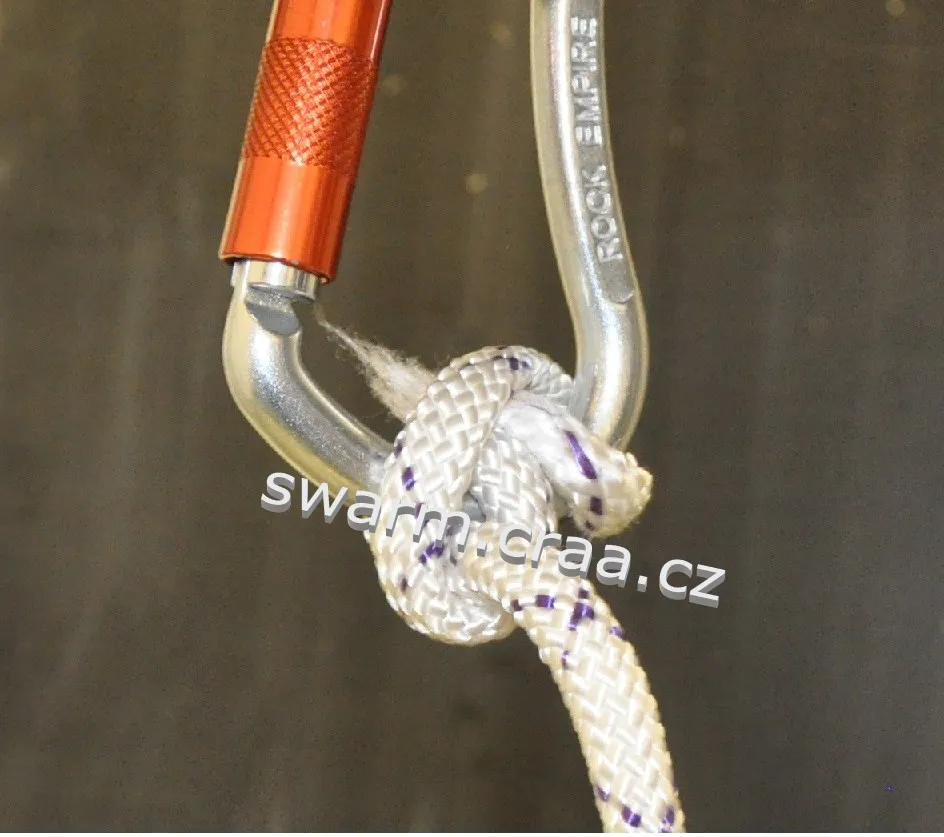
Table 1: Test results of the front version
| Test | Breaking strength |
|---|---|
| č. 1 | 18.00 kN |
| č. 2 | 17.15 kN |
| č. 3 | 16.60 kN |
Table 2: Front version strength
| Average strength | Squared deviations from the mean | Mean squared error |
|---|---|---|
| 17.25 kN | 0.54 kN | 0.41 kN |
Table 3: Test results of the rear version
| Test | Breaking strength |
|---|---|
| č. 1 | 17.95 kN |
| č. 2 | 18.18 kN |
| č. 3 | 17.45 kN |
Table 4: Rear version strength
| Average strength | Squared deviations from the mean | Mean squared error |
|---|---|---|
| 17.86 kN | 0.29 kN | 0.22 kN |
From the tables, it can be seen that the higher strength shown by the rear version is not significant (it is a difference of 0.61 kN).
4 Discussion
It is a well-known and repeatedly proven fact that a knot tied to a rope reduces the strength of the rope. It is also no secret that the method of tying and use affects its strength. Examples include the so-called outside and inside versions of the figure eight loop, the figure nine loop and other knots [2, p. 415].
In the case of the figure eight loop, the recommended way (inside version) of use is indirectly based on the technical standard [10, Fig. 8], there is no specified way (version) of use for the Polish knot. Some publications show loading of the rear strand [4, p. 4.1], but rather than being the result of research, this use is based more on the orderliness of the knot in the picture and the overall appearance of the knot tied to the anchor point in the wall.
In the case of the 10.5 mm Truck (Courant) rope, the manufacturer states a nearly 37% reduction in rope strength7 when using a figure eight loop. Tests have shown that the rear version of the Polish knot will reduce rope strength by slightly more than 40% and the front version will reduce rope strength by just under 43%.
This comparison partially disqualifies the Polish knot. On the other hand, thanks to its quick and easy tying and subsequent untying, the Polish knot has its place in practice. However, its greatest advantage (apart from operational adjustability) is the minimal rope consumption. It definitely has its role for use in rope access, rope rescue work or caving. It is surprising how much it is neglected in practice.

The tests performed showed that which strand of the rope comes out of the Polonaise and is loaded plays only a minor role. When loading the front version, the total strength is 17.3 ± 0.5 kN. In the case of the rear version, the strength is 17.9 ± 0.3 kN.
However, even with these findings, there is room for further research in the case of the Polish knot. Especially then:
- using the Polish knot in different connectors/carabiners (e.g. smaller diameter, smaller size, irregular shape, etc.),
- when used with different ropes (different ages and different rope diameters),
- dynamic loading during fall arrest,
- when used with wet or dirty rope.
5 Conclusion
Tests of the Polish knot performed on a rope with a manufacturer-specified diameter of 10.5 mm (with an actual diameter of 10.69 mm) showed that the Polish will reduce its strength by approximately 42%. When comparing the two versions of the possible load of the knot, the strength of the front version is 17.25 ± 0.54 kN and the strength of the back version is 17.86 ± 0.29 kN. These values are more than sufficient for practical use and, together with the other benefits of this knot, the Polish knot is suitable for use.
The authors are aware that the three measurements taken may not be considered conclusive. It is important to note that the intent of the test was to compare two rope strands coming from the same knot, not to study the strength of the Polish knot, as both authors recommend.
Acknowledgments
This research did not receive any grant from funding agencies in the public, commercial, or not-for-profit sectors. Thanks for providing test samples (ropes, lanyards and connectors/carabiners) to the following subjects (in alphabetical order): Courant, Lezectví.cz and Worksafety.cz.
References
[1] MARBACH, Georges and Bernard TOURTE. Alpine Caving Techniques. Allschwill, Caving Publications International, 2002. ISBN 3-908495-10-5
[2] ŠIMON, Jan, Vladimír DEKÝŠ and Peter PALČEK. Revision of Commonly Used Loop Knots Efficiencies. Acta Physica Polonica, A 2020, 138, pp. 404–420. DOI: http://doi.org/10.12693/APhysPolA.138.404.
[3] ČSN 83 2610 Knots – Terminology. Prague: Czech Standardization Agency, 2021. Sorting symbol: 832610.
[4] MATÝSEK, Radomil. Speleoalpinismus I. and II. part [CD-ROM]. Ostrava: Speleomat, 2002.
[5] KOUTECKÝ, Bohuslav. Některé méně známé uzly a jejich speleologické využití. Speleo. 2008, vol. 18, no. 50, pp. 60 – 68. ISSN 1213-4724.
[6] MARBACH, Georges and Jean-Louis ROCOURT. Techniques de la spéléologie alpine. 3rd ed. Pont-en-Royans: Expé, 2000. ISBN 2-9514640-0-2.
[7] ASHLEY, Clifford W. and Geoffrey BUDWORTH. The Ashley Book of Knots. New York, NY: Doubleday, a division of Batnam Doubleday Dell Publishing Group, Inc., 1994. ISBN 978-0-385-04025-9.
[8] EN 1891 Personal protective equipment for the prevention of falls from a height – Low stretch kernmantel ropes. Prague: Czech Standards Institute, 2000. Sorting symbol: 832641.
[9] EN 364 Personal protective equipment against falls from a height. Test methods. Prague: Czech Standards Institute, 1996. Sorting symbol: 832660.
[10] EN 12841 Personal fall protection equipment – Rope access systems – Rope adjustment devices. Prague: Czech Standardization Agency, 2024. Sorting symbol: 832635.
- using a figure eight loop ↩︎
- of the total strength of the rope ↩︎
- The rope is loaded with a load of 50 kg for 5 minutes, then the load is increased to 150 kg and the elongation of the rope is measured [8, Art. 5.6]. ↩︎
- a three-meter rope sample was loaded with a 10 kg load 1350 mm from the anchor point and the diameter was measured every 300 mm from two sides at 90° intervals using a caliper [8, Art. 5.3]. ↩︎
- The Magnum Steel 2T connector/carabiner reffers to EN 362:2004 B and EN 12275:2013 B. ↩︎
- t = t(P, n) ↩︎
- This information is provided by the manufacturer in the instructions without further specification of how the knot test was performed and which strand of the rope (inside or outside version) was loaded. ↩︎
- při použití osmičkového oka ↩︎
- z celkové pevnosti lana ↩︎
- Lano se na dobu 5 minut zatíží břemenem o hmotnosti 50 kg, poté se zátěž zvýší na 150 kg a změří se prodloužení lana [8, čl. 5.6]. ↩︎
- třímetrový vzorek lana byl 1350 mm od kotevního bodu zatížen břemenem o hmotnosti 10 kg a každých 300 mm byl ze dvou stran s odstupem 90° změřen průměr pomocí posuvného měřítka [8, čl. 5.3] ↩︎
- Karabina Magnum Steel 2T je certifikovaná podle EN 362:2004 B a EN 12275:2013 B. ↩︎
- t = t(P, n) ↩︎
- Tento údaj uvádí výrobce v návodu bez bližšího upřesnění, jakým způsobem zkoušku lana v uzlu provádí a který konec lana při tom zatěžuje. ↩︎